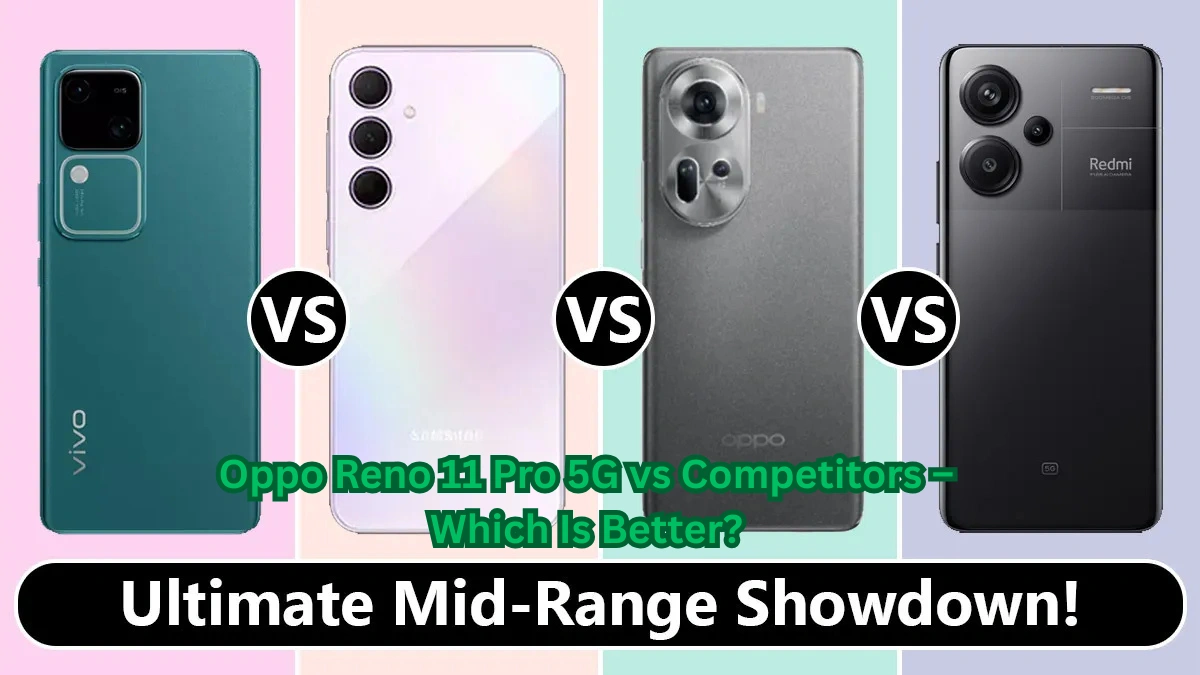
Oppo Reno 11 Pro 5G vs OnePlus 12, Xiaomi 14, Samsung Galaxy S24 and Pixel 8 Pro — an in-depth 4,500-word comparison of cameras, performance, battery, display, software, price and who should buy which phone.
Introduction
If you’re deciding between the Oppo Reno 11 Pro 5G and other top phones, you want a comparison that goes beyond spec lists. Oppo Reno 11 Pro 5G This article compares real-world strengths and weaknesses across these categories: Oppo Reno 11 Pro 5G design and build, display, cameras (photo/video), performance and gaming, battery and charging, software and support, pricing/value and final recommendations for different user types.Oppo Reno 11 Pro 5G Where a factual specification is important, I’ll cite official sources and respected reviews.
Who the Reno 11 Pro 5G is aimed at
Oppo Reno 11 Pro 5G positioned the Reno 11 Pro as a portrait-centric, stylish upper-midrange phone: lightweight, curved AMOLED screen with punchy colors, a dedicated portrait/telephoto camera for flattering closeups, and balanced everyday performance. It’s a phone for users who prioritize portrait photography, slim design and good battery life without paying flagship prices.
The competitors we’ll compare it to Oppo Reno 11 Pro 5G (why these phones)
- OnePlus 12 — top raw performance and fast charging; direct competitor for users who want speed.
- Xiaomi 14 — flagship imaging partnership (Leica) and refined display experience.
- Samsung Galaxy S24 — best-in-class display + ecosystem + long software support.
- Google Pixel 8 Pro — computational photography leader and best software AI.
These cover the main decision buckets: camera-first (Reno/Xiaomi/Pixel), performance-first (OnePlus), ecosystem & display (Samsung).
Headline specs (short, comparable)
Oppo Reno 11 Pro 5G
- Oppo Reno 11 Pro 5G Display: Oppo Reno 11 Pro 5G 6.7″ curved AMOLED, ~1240×2772, 120Hz, ~950 nits peak (local).
- Oppo Reno 11 Pro 5G Chipset: Oppo Reno 11 Pro 5G MediaTek Dimensity 8200 / Dimensity 9200 variants depending on market (mid-to-upper).
- Oppo Reno 11 Pro 5G Cameras: Oppo Reno 11 Pro 5G 50MP main (OIS) + 32MP telephoto (2× portrait) + 8MP ultrawide; 32MP front.
- Oppo Reno 11 Pro 5G Battery / Charging: Oppo Reno 11 Pro 5G ~4600 mAh, 80W fast charge (SUPERVOOC).
- Oppo Reno 11 Pro 5G Weight: Oppo Reno 11 Pro 5G ~181 g (very light).
OnePlus 12
- Display: 6.82″ 2K LTPO AMOLED, 120Hz.
- Chipset: Snapdragon 8 Gen 3.
- Cameras: Hasselblad-tuned triple setup (50MP main typical).
- Battery / Charging: ~5400 mAh, 100W wired + 50W wireless.
Xiaomi 14
- Display: 6.36″ 1.5K AMOLED, 1–120Hz LTPO, up to 1000 nits typical.
- Chipset: Snapdragon 8 Gen 3.
- Cameras: Leica-tuned triple 50MP setup.
Samsung Galaxy S24
- Display: 6.2–6.7″ Dynamic AMOLED 2X, 120Hz, high peak brightness.
- Chipset: Snapdragon (or Exynos in some regions) — S24 uses latest 2024 silicon in most regions.
- Cameras: 50MP main + 12MP ultrawide + 10MP telephoto (in S24+ variants).
Google Pixel 8 Pro
- Display: 6.7″ LTPO OLED 1–120Hz, very high peak brightness.
- Chipset: Google Tensor G3.
- Cameras: 50MP + 48MP ultrawide + 48MP telephoto, heavy computational photography suite.
Design & build — feel, ergonomics and durability
Reno 11 Pro 5G
- The Reno 11 Pro stands out for being slim and exceptionally light (~181 g). The curved display and narrow bezels give it a premium look without the bulk of many flagships. It tends to favor style and pocketability over raw on-paper spec dominance.
Competitors
- OnePlus 12 and Xiaomi 14 are more engineering-heavy: slightly larger, with aggressive cooling and more premium materials on top models.
- Samsung S24 sticks to a conservative, boxy flagship aesthetic with armor aluminum and a reputation for durable builds.
- Pixel 8 Pro uses glass and metal with a distinctive camera bar; it’s solid but heavier.
Verdict (Design): If you want the lightest, most pocketable premium look — Reno 11 Pro leads. If you prefer solidity and flagship heft or special materials (ceramics, matte glass), OnePlus/Xiaomi/Samsung may feel more premium.
Display — brightness, color, and daily use
Reno 11 Pro
- Curved 6.7″ AMOLED with vivid color and 120Hz smoothing. Oppo advertises ~950 nits local peak which is bright enough for most outdoor use. The curved edges lend a modern look and immersive feel.
OnePlus 12 / Xiaomi 14 / Samsung S24 / Pixel 8 Pro
- Competitors generally use top-tier LTPO AMOLED panels with adaptive refresh (1–120Hz or 1–120Hz dynamic) and higher peak brightness figures (Xiaomi and Pixel often quoted at 1000 nits typical / even higher peak HDR nits). Samsung’s displays remain the gold standard for color accuracy and outdoor legibility.
Verdict (Display): Reno’s display is excellent for its segment — smooth, colorful and bright. But in raw panel tech and peak HDR brightness, the Xiaomi, Pixel and Samsung flagships have measurable advantages.
Cameras — still photography and video (where Reno focuses)
Reno 11 Pro strengths
- Oppo Reno 11 Pro 5G Oppo marketed Reno 11 Pro as a portrait expert: it uses a 32MP telephoto portrait lens (2×) and a HyperTone image engine to produce flattering skin tones and strong portrait separation. Counterpoint and reviews noted very good portrait results and improved portrait algorithms versus previous Reno models.
- Main 50MP sensor with OIS handles everyday shots well; dedicated portrait tele adds real, usable 2× framing instead of cropping.
Competitors’ camera advantages
- Xiaomi 14 — Leica-tuned color signature and high-quality main sensor; excels in overall image character and consistency.
- Pixel 8 Pro — computational photography king: excels in low-light, HDR blending, Magic Editor/AI features and pro camera controls.
- OnePlus 12 — strong hardware and Hasselblad tuning for natural colors; very competitive in daylight and video.
- Samsung S24 — reliable, accurate colors, excellent video stabilization and wide dynamic range across lighting conditions.
Video
- Oppo Reno 11 Pro 5G can make great portrait-style clips, but competitors often have better stabilization, higher sustained bitrate options and more mature video pipelines—particularly Samsung and Google for stabilization and OnePlus/Xiaomi for raw capture fidelity.
Verdict (Camera): Reno 11 Pro is excellent for portraits and everyday snaps — arguably better than many phones in its price bracket at portraits. For the absolute best overall imaging (low light, pro controls, best ultrawide/zoom versatility), Pixel/OnePlus/Xiaomi/Samsung often have the edge.
Performance & gaming
Reno 11 Pro
- Uses a MediaTek Dimensity series chipset (Dimensity 8200 family or regional variations), which provides very good everyday performance and decent thermals, but it’s not quite at the raw flagship level of Snapdragon 8 Gen 3/Gen 4. For most apps, social media, streaming and casual gaming it’s more than sufficient.
Competitors
- OnePlus 12 and Xiaomi 14 (Snapdragon 8 Gen 3) lead in CPU/GPU benchmarks and sustained gaming performance. The OnePlus 12 also includes aggressive cooling and features for frame-rate stability.
- Pixel 8 Pro (Tensor G3) prioritizes AI tasks and photography pipelines over raw GPU speed; still solid for most gaming.
Verdict (Performance): If you want pure performance and best-in-class gaming FPS, choose OnePlus 12 or Xiaomi 14. For balanced real-world snappiness plus excellent portrait photography, Reno 11 Pro is a sensible pick.
Battery life and charging
Reno 11 Pro
- Typical battery ~4600 mAh with 80W SUPERVOOC fast charging. That combo yields fast top-ups and solid daily endurance in real use thanks to Oppo’s charging efficiency.
Competitors
- OnePlus 12 often ships with larger batteries (5,000+ mAh or 5,400 mAh depending on variant) and faster charging (100W), plus wireless charging on higher trims.
- Samsung Galaxy S24 tends to have smaller batteries vs. size class but optimized software yields competitive real-world duration; charging slower (25–45W) comparatively.
- Xiaomi 14 and Pixel 8 Pro provide a mix — Xiaomi often matches or exceeds charging speeds; Pixel typically focuses on balanced battery rather than blistering wired speeds.
Verdict (Battery & charging): Reno’s 80W charging is excellent and comparable to flagship speeds from a couple years ago; OnePlus and Xiaomi can beat it with 100W+ charging and larger batteries. For daily endurance, Reno is more than acceptable.
Software & updates
Reno 11 Pro
- Ships with ColorOS (Android 14 in many markets). ColorOS is feature-rich and customizable but historically includes extra preinstalled apps and skins; Oppo has been improving update cadence but not always matching Google or Samsung’s multi-year promises.
Competitors
- Google Pixel — pure Android with the best and fastest OS/feature updates and several years of guaranteed OS/security updates.
- Samsung — excellent multi-year update commitments and a polished One UI experience, plus deep ecosystem integrations.
- OnePlus/Xiaomi — OxygenOS and MIUI offer many features; OnePlus historically improves with faster updates but varies by region; Xiaomi provides frequent feature updates, though update length varies.
Verdict (Software): If guaranteed long-term OS/security updates and the cleanest Android are priorities, Pixel and Samsung lead. Reno (ColorOS) provides extras and features but lags slightly in update guarantees.
Value & price — what you actually pay for
Reno 11 Pro
- Oppo often prices the Reno line to be value-heavy for camera-centric features and design — delivering a camera and look similar to higher-priced flagships but at a more approachable price point (pricing varies by market).
Competitors
- OnePlus 12 and Xiaomi 14 usually sit at true flagship prices (or slightly below depending on regional promotions) — you pay more for top silicon and display tech. Samsung S24 can be pricier for equivalent storage; Pixel 8 Pro sits in the premium price band for unrivaled software camera features.
Verdict (Value): Reno 11 Pro often presents the best price-to-camera value among these — great portrait features and form factor with a lower headline price than full flagship alternatives. If you want flagship raw performance or ecosystem perks, be prepared to spend more.
Hands-on user scenarios — which phone for whom
- If you prioritize portraits, slim design and value: Oppo Reno 11 Pro 5G. It is focused on flattering portraits, is light and easy to handle, and costs less than top flagships.
- If you prioritize raw performance and charging: OnePlus 12. Best for heavy gamers and power users.
- If you want the best computational photography + clean Android: Pixel 8 Pro. Great for photos, AI features and fast OS updates.
- If you want the best display + ecosystem + long updates: Samsung Galaxy S24. Ideal for users invested in Samsung’s devices and services.
- If you want Leica-style imaging and balanced flagship hardware: Xiaomi 14. Great imaging character and solid hardware.
Deep dive: Portraits & selfies — why Reno shines
Oppo has long tuned Reno to produce flattering portrait tones and natural skin rendering. The Reno 11 Pro’s 32MP portrait lens (dedicated telephoto) captures tighter framing and better subject separation compared to phones that digitally crop the main sensor. Oppo also deployed a HyperTone image engine to refine color, dynamic range and background blur for portraits — reviewers and imaging labs noted real improvements. If portraits are the most important shots in your camera use, Reno is specially optimized for that use case.
Video, stabilization and pro controls
If you’re a video content creator:
- Samsung S24 and OnePlus 12 offer highly reliable stabilization and manual controls for bitrate and color.
- Pixel 8 Pro provides AI-assisted editing and computational advantages for low light.
- Reno 11 Pro is competent for vlogging and portrait video but slightly behind in the most advanced stabilization and bitrate control features.
Pros & cons summary Oppo Reno 11 Pro 5G(quick list)
Oppo Reno 11 Pro 5G — Pros
- Fantastic portrait camera and skin-tone tuning.
- Slim, very light, premium design.
- 120Hz curved AMOLED and fast 80W charging.
- Very strong price-to-feature ratio in camera and design.
Oppo Reno 11 Pro 5G — Cons
- Chipset is not top-tier Snapdragon in many regions (Dimensity class).
- Software update promise not as strong as Pixel or Samsung.
- While great at portraits, not the absolute best in every camera metric (ultrawide/tele reach, low light vs Pixel/Samsung).
Competitors summary
- OnePlus 12 — top performance and super fast charging; pricier.
- Xiaomi 14 — Leica tuning and excellent display; strong imaging.
- Samsung S24 — best display, ecosystem and software support; premium priced.
- Pixel 8 Pro — best computational photography and fastest Android updates.
Real-world battery & daily use notes
- Reno 11 Pro’s combination of efficient MediaTek silicon and 4600 mAh results in full-day usage under mixed use, with fast charging that makes short top-ups painless. OnePlus/Xiaomi may produce longer runtime because of larger battery cells, but Reno balances weight and endurance well.
Pricing considerations (buying tips)
- Wait for seasonal offers: Oppo, OnePlus and Xiaomi often run aggressive discounts and bank offers.
- Compare storage/RAM: Higher RAM (12–16GB) and UFS 4.0 storage in OnePlus/Xiaomi improves long-term snappiness. Reno usually offers competitive RAM at lower cost.
Final verdict — which is better?
There’s no single “better” phone; it depends on what you value:
- Choose Oppo Reno 11 Pro 5G if: you prioritize portrait photography, want a slim and light premium phone, and want flagship looks without flagship prices. Reno is the most balanced camera-centric value among the group.
- Choose OnePlus 12 if: you need raw performance, best gaming experience, largest battery and the fastest charging available.
- Choose Xiaomi 14 if: you want Leica-style image character and a premium display in a compactish form.
- Choose Samsung Galaxy S24 if: you want a top display, complete ecosystem and long software support.
- Choose Pixel 8 Pro if: you want the cleanest Android, best software AI, and computational photography for a wide range of shooting conditions.
Conclusion
The Oppo Reno 11 Pro 5G is a focused, attractive package: great portraits, refined design and strong everyday performance at a price that undercuts many full flagships. If your camera needs tilt heavily toward portraits, skin tones and flattering telephoto framing, Reno 11 Pro is hard to beat for the money. If instead your priority is pure speed, maximum battery, or the most advanced computational photography/video pipelines, then the OnePlus, Xiaomi, Samsung or Pixel alternatives will serve you better — at a higher or comparable price. Evaluate which strengths matter most to you (portrait vs raw power vs software/updates vs display) and pick accordingly.
Sources:
FAQs
- Is the Reno 11 Pro 5G better than the OnePlus 12 for gaming?
No — OnePlus 12 uses Snapdragon 8 Gen 3 and larger battery with advanced cooling, so it generally outperforms the Reno 11 Pro in sustained gaming and raw GPU performance. - Does the Reno 11 Pro take better portraits than Pixel 8 Pro?
Reno 11 Pro specializes in flattering portrait tones and has a dedicated portrait tele lens, so it often produces pleasing portrait shots out of the box. However, Pixel 8 Pro’s computational photography can outperform in low light and complex HDR scenes; the “better” phone depends on the lighting and style you prefer. - How long does the Reno 11 Pro battery last?
Typical mixed-use lasts a full day for most users (4600 mAh + efficient chipset). Charging is fast at 80W, enabling quick top-ups. Actual life will vary based on usage and screen refresh settings. - Will Reno 11 Pro get Android updates for many years?
Oppo has improved update cadence, but historically Google (Pixel) and Samsung have stronger multi-year update guarantees. If long OS support is critical, Pixel or Samsung may be safer choices. - Is the Reno 11 Pro worth it over a Xiaomi 14?
If you want Leica-style image signature and possibly a slightly more refined display, Xiaomi 14 may be preferable. If you want portrait-focused results and a lighter handset for less money, Reno 11 Pro is excellent value. - Which phone has better low-light photos — Reno 11 Pro or Pixel 8 Pro?
Pixel 8 Pro tends to lead in low-light thanks to advanced computational photography; Reno 11 Pro is very good in normal light and for portraits but Pixel is typically stronger at extreme low light. - Should I wait for discounts or buy now?
If you need a phone immediately, buy the one that best matches your priorities. If you can wait, seasonal sales and bank offers frequently reduce prices on Oppo, OnePlus and Xiaomi models — often making the Reno/Xiaomi/OnePlus even more compelling.