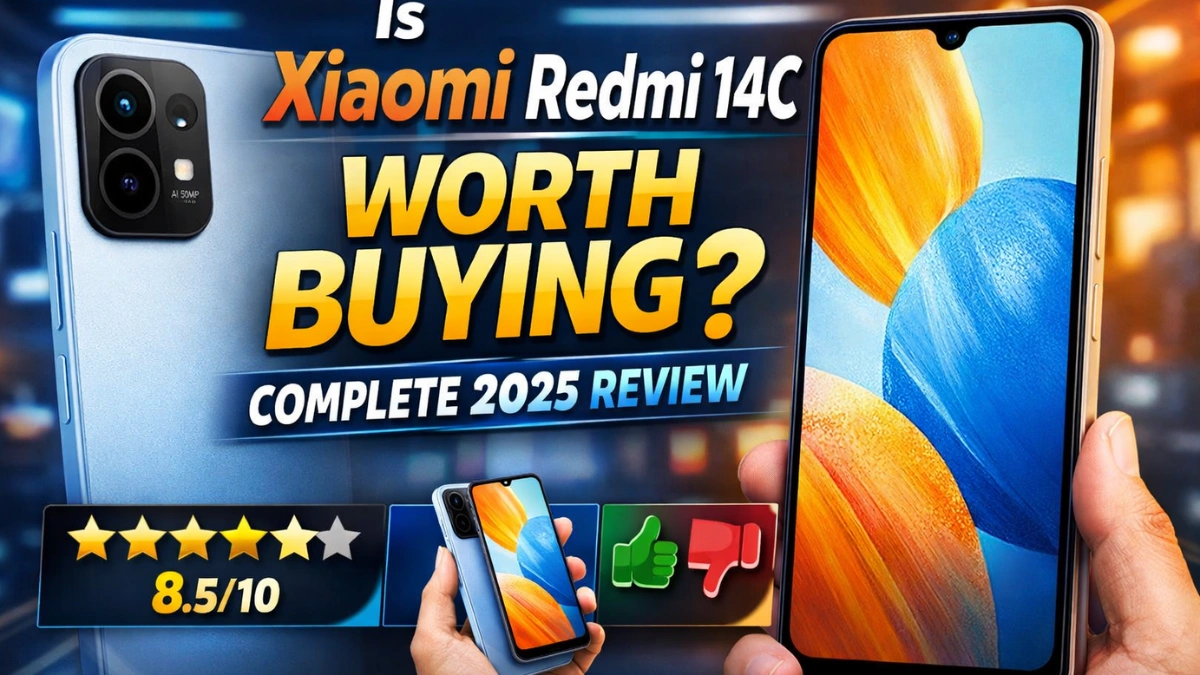
Is the Xiaomi Redmi i4C still worth buying in 2025? Discover an in-depth review covering design, performance, battery, camera, software, pros & cons, user experience, and FAQs to help you decide before you buy.
Introduction
The smartphone market moves fast. Devices that were once praised for their value can quickly become outdated. The Xiaomi Redmi i4C, also known as the Mi 4c, launched as an affordable yet powerful mid-range phone. Its compact design, solid hardware, and USB-C charging made it popular at the time. But in 2025, technology has evolved significantly. The real question now is: Does the Xiaomi Redmi i4C still make sense to buy today?
This article provides a detailed review covering every aspect of the phone — from design and performance to battery life, camera quality, software, and long-term usability — to help you make an informed decision.
1. Overview
The Xiaomi Redmi i4C arrived as a device that offered more than most phones in its price range. Its 5-inch 1080p display, Snapdragon processor, and USB-C port were ahead of the curve for an affordable device. It offered users a reliable smartphone experience without breaking the bank.
Today, the smartphone landscape has changed. Phones now come with larger displays, higher refresh rates, AI-powered cameras, and much faster processors. This raises concerns about whether a phone like the Xiaomi Redmi i4C can still compete in 2025.
2. Design and Build Quality
Despite its age, the Xiaomi Redmi i4C has a solid and practical design. Its lightweight build, weighing around 132 grams, and slim profile make it easy to handle. The phone is compact enough to fit comfortably in one hand, which is rare for many modern smartphones with large screens.
The front display is surrounded by relatively thick bezels, which were normal when it launched. The rear has a simple matte finish that resists fingerprints. While the design is outdated compared to modern devices, its compact form factor is appealing to users who prefer smaller phones.
Physical features include:
- USB-C charging port
- Single rear camera
- Standard headphone jack
- Side-mounted volume and power buttons
The phone is durable enough for daily use but lacks modern features like water resistance, glass backs, or metal frames.
3. Display Quality
The 5-inch Full HD (1080 x 1920) IPS LCD display offers a sharp viewing experience with a pixel density of about 441 PPI. For its size, the screen is detailed and crisp, making it suitable for reading, browsing, and watching videos.
Pros of the display:
- Sharp and clear images
- Decent color reproduction
- Comfortable brightness for indoor use
Cons of the display:
- Lacks high refresh rate (no 90Hz or 120Hz)
- Lower brightness in direct sunlight compared to modern smartphones
- No HDR support
While the screen was impressive at launch, by 2025 standards it feels outdated, especially for gaming or multimedia-heavy use.
4. Performance and Hardware
Performance is one of the major limitations of the Xiaomi Redmi i4C in 2025. Its Snapdragon processor was mid-range at launch, but today it struggles with modern apps and multitasking.
Hardware specifications:
- Processor: Snapdragon 808
- RAM: 2GB or 3GB
- Storage: 16GB or 32GB (non-expandable)
- GPU: Adreno 418
Real-world performance:
- Light apps and messaging run smoothly
- Heavy apps or modern games may lag
- Multitasking is limited due to low RAM
The phone was efficient for its time, but in 2025, users may experience slowdowns and longer load times with newer applications.
5. Battery Life and Charging
The Xiaomi Redmi i4C is powered by a 3080mAh battery, which offers reasonable endurance. For light to moderate users, it can last about a day on a single charge. Heavy usage, including gaming and video streaming, will require more frequent charging.
Charging features:
- USB-C port
- Supports fast charging (relatively slow compared to modern fast chargers)
Pros:
- USB-C convenience
- Can last a full day with basic usage
Cons:
- Smaller battery compared to modern budget phones
- Fast charging speed is limited by the older hardware
In summary, battery life is sufficient for casual use but will not meet the expectations of users who need extended uptime.
6. Camera Performance
The camera setup on the Xiaomi Redmi i4C is basic by 2025 standards.
- Rear Camera: 13MP
- Front Camera: 5MP
Strengths:
- Decent photos in good lighting conditions
- Lightweight camera app for simple photography
Limitations:
- Low-light photography is poor
- No advanced features like night mode, AI enhancement, or multiple lenses
- Video recording limited to 1080p
For casual snapshots and video calls, the camera is sufficient, but it cannot compete with modern budget or mid-range smartphones.
7. Software and Updates
Software is another key limitation. The Xiaomi Redmi i4C runs an older version of Android with MIUI. It no longer receives official updates or security patches, which poses a concern for long-term usage.
Implications:
- Older Android version may lack compatibility with some apps
- Security vulnerabilities may exist due to lack of updates
- Missing new features introduced in recent Android versions
Modern phones offer better software support and frequent updates, making them more secure and versatile.
8. Connectivity and Additional Features
The Xiaomi Redmi i4C supports:
- Dual SIM functionality
- 4G LTE networks
- Wi-Fi and Bluetooth (older standards)
Missing features in 2025:
- NFC for digital payments
- Wi-Fi 6
- High-speed Bluetooth connectivity
- Advanced sensors (like fingerprint or face unlock on newer phones)
Connectivity remains basic and sufficient for standard use but is limited compared to modern alternatives.
9. Pros and Cons in 2025
Pros:
- Compact and lightweight design
- Sharp Full HD display for its size
- USB-C charging support
- Suitable for basic use: messaging, calls, and light apps
Cons:
- Outdated processor and limited RAM
- Low storage without expansion option
- No software updates or security patches
- Camera quality is mediocre
- Lacks modern features like high refresh rate, AI camera, and advanced connectivity
10. Is It Worth Buying in 2025?
For most users in 2025, the Xiaomi Redmi i4C is not recommended. Modern budget smartphones offer larger displays, better cameras, higher RAM, stronger processors, and longer software support.
However, it may still suit:
- Users with a very limited budget
- Those who only need a phone for calls, texting, and occasional browsing
- Fans of compact phones who do not mind outdated features
If longevity, performance, and security are priorities, newer alternatives are a better investment.
Conclusion
The Xiaomi Xiaomi Redmi i4C / Mi 4c was an impressive budget phone at its launch, offering a sharp display, lightweight design, and USB-C charging.
However, in 2025, the phone has several limitations:
- Outdated hardware
- Limited RAM and storage
- Poor camera performance
- No software updates
It can still serve basic needs for casual users, but for anyone who wants reliable performance, security, and modern features, newer budget smartphones are far superior. The Xiaomi Redmi i4C may only be considered if the price is extremely low and expectations are minimal.
Sources:
FAQs
1. Is the Xiaomi Xiaomi Redmi i4C worth buying in 2025?
It’s only suitable for basic use and extremely tight budgets. Modern phones are better choices.
2. Does the Redmi i4C get software updates?
No, the device is discontinued and no longer receives Android updates or security patches.
3. How good is the camera?
It’s average; okay for daylight photos but poor in low-light conditions.
4. Can storage be expanded?
No, storage is fixed at 16GB or 32GB.
5. How long does the battery last?
With light usage, it can last a day. Heavy users may need to charge before evening.
6. Does it support 4G?
Yes, the phone supports 4G LTE connectivity.
7. What are better alternatives in 2025?
Current budget smartphones with modern specs, bigger batteries, better cameras, and long-term software support.