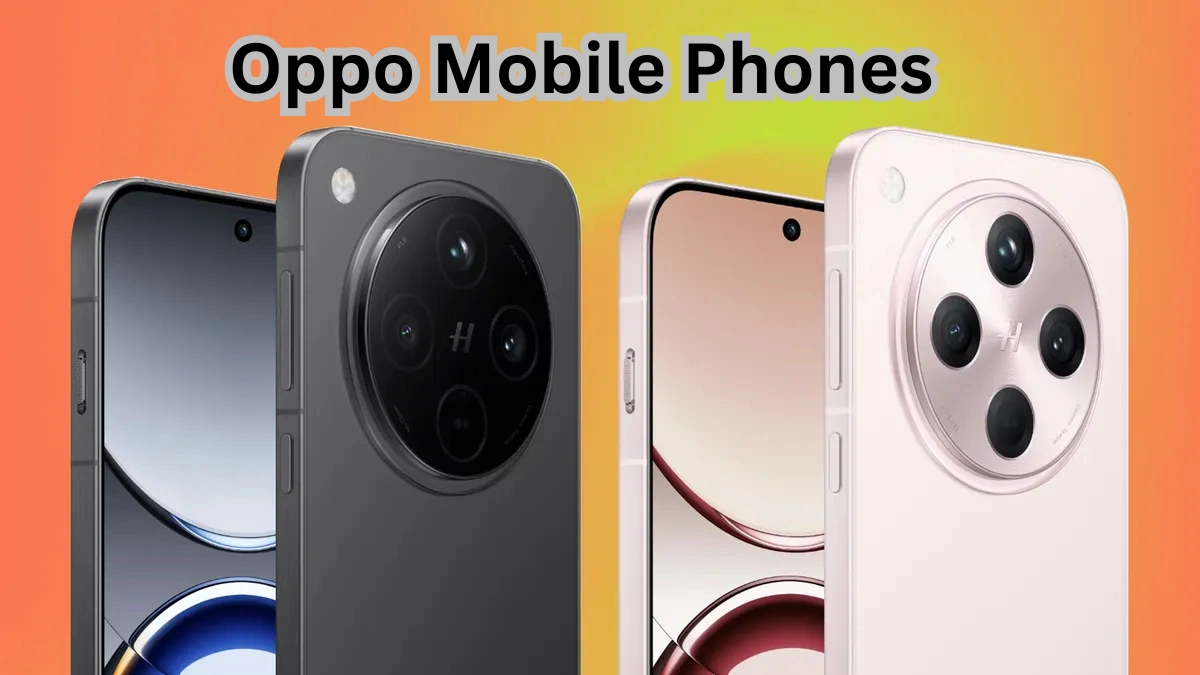
Discover the latest Oppo mobile phones with AI camera innovations and 5G support. In-depth guide covering camera features, performance, battery & charging, design, software, buying tips, FAQs, and SEO-ready insights.
Introduction
Smartphones continue to evolve rapidly, and Oppo Mobile Phones has been at the forefront of several user-facing trends: camera innovation powered by artificial intelligence, ultra-fast charging, and the broad rollout of 5G connectivity across price tiers. This article is a deep, SEO-optimized guide to the latest Oppo mobile phones with AI camera & 5G support. It covers how Oppo Mobile Phones integrates AI into imaging, what 5G means for everyday use, performance considerations, display and design, battery and charging technologies, software features, and how to choose the right Oppo Mobile Phones for your needs.
Whether you’re a photography enthusiast, a gamer, a productivity-focused professional, or simply shopping for a future-proof handset, this long-form piece will walk you through everything you need to know to make an informed decision—and give you content-ready copy you can use for blogs, product pages, or detailed buyer’s guides.
Why “Latest” Matters: The Speed of Smartphone Evolution
The term “latest” in smartphones isn’t just about new model numbers—it’s about the most recent improvements in hardware, software features, and real-world user benefits. Over the last few years Oppo Mobile Phones has prioritized three interconnected pillars:
- AI-driven camera features — smarter scene recognition, computational photography, real-time video enhancements, and software filters that mimic professional equipment.
- 5G connectivity — not only faster download/upload speeds, but lower latency, improved streaming, and better performance in congested networks.
- Battery & charging innovations — higher capacity cells, optimized power management, and proprietary fast-charging technologies.
This guide synthesizes these pillars into a single resource that explains both the technology and the user-level advantages.
Section 1 — AI Camera: What It Means & Why It Matters
1.1 What is AI in Oppo Mobile Phones?
When we talk about AI in mobile cameras, we’re referring to machine learning models and algorithms embedded in the camera pipeline that help the phone make intelligent decisions during capture and post-processing. These tasks include:
- Scene recognition (detecting landscape, portrait, food, night, text, pets, etc.)
- Auto-exposure and dynamic range optimization
- Multi-frame stacking and noise reduction
- Super-resolution and detail enhancement
- Portrait segmentation and natural bokeh synthesis
- Real-time video stabilization and color grading
- Object tracking and focus prediction for moving subjects
AI transforms raw sensor data into better-looking photos automatically, reducing the need for manual adjustments and helping casual users achieve near-professional results.
1.2 How Oppo Mobile Phones applies AI to photography
Oppo Mobile Phones approach typically combines powerful sensors, on-device neural processing, and software-level features that are tuned for everyday use:
- Scene-aware tuning: The AI detects scene types and applies tailored exposure, saturation, and clarity profiles. For example, sunset scenes get boosted warmth and contrast, while greenery is tuned to preserve natural textures.
- Portrait intelligence: AI improves subject isolation, enhances skin tones subtly, and retains natural hair/fur detail—critical for portraits and pet photography.
- Low-light algorithms: Multi-frame stacking combined with AI-based denoising reduces grain while preserving detail in shadows and highlights.
- Computational zoom: Instead of relying solely on optical zoom, AI reconstructs detail from multiple frames to create sharp zoomed images.
- Video AI: Real-time HDR, electronic image stabilization, and subject tracking make mobile video suitable for vlogging and casual filmmaking.
1.3 Key AI camera features to look for Oppo Mobile Phones
When comparing Oppo phones or shopping generally, watch for these AI-driven capabilities:
- Multi-frame HDR & Night Modes: Produces brighter, cleaner images in challenging lighting.
- AI Portrait Mode: Quality bokeh simulation and accurate edge detection.
- Ultra-wide stitching & distortion correction: For landscape and architectural shots.
- AI Super Resolution / Multi-frame Zoom: Sharpened crop zooms without heavy artifacts.
- Real-time filters & video color profiles: Useful for content creators who want minimal editing.
- Text recognition (OCR) & document scanning: Practical for productivity.
Section 2 — 5G Support: Real Benefits Beyond Speed
2.1 What 5G brings to users Oppo Mobile Phones
5G is more than raw download Mbps. The most meaningful benefits include:
- Lower latency: Critical for cloud gaming, remote collaboration, and AR applications.
- More consistent speeds in crowds: Better performance during events and in dense urban zones.
- Faster uploads: Easier for creators to post large videos and high-resolution photos quickly.
- Future-proofing: As carriers expand services (like mobile edge computing and private 5G), devices with robust 5G support will unlock new features.
2.2 Types of 5G support and bands Oppo Mobile Phones
Modern phones support several 5G modes:
- Sub-6 GHz 5G: Wide coverage, good speeds—most common globally.
- mmWave 5G: Very high speeds but limited range—seen in selected markets.
- SA (Standalone) vs NSA (Non-Standalone): SA enables full 5G core features; NSA is a hybrid using existing 4G infrastructure.
When buying an Oppo phone, ensure the model supports the 5G bands relevant to your country and uses SA where available for best future capabilities.
2.3 Real-world 5G use cases for Oppo phones Oppo Mobile Phones
- Streaming high-resolution live video with low lag: Great for influencers and live broadcasters.
- Cloud gaming and remote desktop apps: 5G reduces input lag for a smoother experience.
- Quick backups and content upload: Speeds up workflows for photographers and creators.
- Enhanced navigation and AR apps: Lower latency makes AR overlays more responsive.
Section 3 — Display & Design: Visuals and Ergonomics
3.1 Displays that complement AI imaging Oppo Mobile Phones
Oppo often equips its latest phones with displays that accurately render photos and videos produced by their AI pipelines. Look for:
- High resolution (FHD+ to QHD+) for crisp image previewing.
- AMOLED panels for deep blacks and vivid contrast—important for previewing HDR content.
- High refresh rates (90Hz, 120Hz, or more) for smoother scrolling and more responsive camera UIs.
- High peak brightness & HDR certifications to view images outdoors with accurate color.
3.2 Design language and materials Oppo Mobile Phones
Premium Oppo models typically use refined materials and finishes:
- Glass backs with gradient or matte treatments
- Curved or flat-edge frames for grip comfort
- Slim profiles even with large batteries
- Thoughtful button placement and symmetrical layouts
Design aesthetics matter: the phone should feel good to hold while also complementing the camera’s visual output.
Section 4 — Performance: Chipsets, RAM, Storage & Gaming
4.1 Chipset choices and real-world performance Oppo Mobile Phones
The latest Oppo phones use chipsets across the performance spectrum—mid-range to flagship. Important considerations:
- CPU & GPU performance: Affects camera processing, video encoding, and gaming.
- NPU (Neural Processing Unit): Dedicated AI hardware accelerates on-device AI tasks—key for advanced camera features and real-time effects.
- Thermal management: Sustained camera use, gaming, and prolonged 5G sessions need good heat dissipation to avoid throttling.
4.2 RAM & storage configurations Oppo Mobile Phones
- RAM: 8GB to 16GB is common for multi-tasking and photo editing workflows.
- Storage: 128GB minimum recommended; photographers and content creators should consider 256GB or higher.
- UFS storage: Faster read/write speeds improve app launch times and photo/video offloading.
4.3 Gaming features Oppo Mobile Phones
Oppo often includes software optimizations for gaming:
- Game Boost modes to prioritize CPU/GPU resources.
- Touch sampling rates for responsive input.
- Network optimization to reduce latency during online play.
Section 5 — Battery & Charging: Fast, Safe, and Sustainable
5.1 Battery capacity vs real-world life
Battery capacity (mAh) is only part of the story—software optimization, display settings, and chipset efficiency determine real-world battery life. Oppo pairs large-capacity batteries with aggressive power management to deliver all-day usage.
5.2 Fast-charging technologies
Oppo is known for its proprietary fast-charging systems that significantly cut charging time. Key things to note:
- Charge speed claims: Measured in wattage (e.g., 50W, 80W, 100W+). Higher wattage typically equals faster top-up times.
- Battery health management: Technologies that slow charging near 100% and thermal control systems prolong battery longevity.
- Wireless charging & reverse wireless: Available in higher-tier models for convenience.
5.3 Battery safety & certifications
Modern Oppo phones include multiple safety layers—temperature sensors, over-voltage protection, and battery management algorithms—to balance speed and long-term battery life.
Section 6 — Software: ColorOS, AI Features & Updates
6.1 ColorOS enhancements for imaging & 5G
ColorOS often brings value-added features tied to camera and connectivity:
- AI Camera modes with scene suggestions and smart filters.
- Smart data switching in dual-SIM setups for best 5G availability and reduced data costs.
- One-handed camera UI and enhanced pro modes for advanced control.
6.2 Updates & security
A commitment to timely security patches and Android version updates improves device longevity. Buyers should prefer models with clear update promises.
6.3 Privacy & permissions
Oppo integrates privacy features such as granular permission controls, app sandboxing, and secure folders—a must for users handling sensitive media.
Section 7 — Practical Photo & Video Tips for Oppo Users
7.1 Use AI modes—but learn manual controls too
AI modes are fantastic for quick images, but learning basic manual controls (exposure, ISO, shutter speed) helps you handle extreme scenarios and creative effects.
7.2 Leverage RAW capture for editing
When possible, shoot in RAW or use a pro mode that saves more image data—this gives you more headroom for color grading and noise reduction in post.
7.3 Stabilize for video
Even with AI stabilization, using a gimbal or steady grip produces the best-looking footage for long-form video.
7.4 Mind the lighting
AI improves low-light photos, but adding consistent light sources (even small portable LED panels) greatly enhances results.
7.5 Manage storage and backups
High-resolution photos and 4K/8K videos consume storage. Regular offloads or cloud backups keep performance smooth and protect your media.
Section 8 — Buying Guide: How to Choose the Right Oppo Phone
8.1 Identify your primary use-case
- Photography-first users: Prioritize models with advanced multi-camera setups, large sensors, and robust AI imaging.
- Performance/gaming: Look for top-tier chipsets, high refresh rate displays, and advanced cooling.
- Battery life & fast charging: Choose higher-capacity batteries with the fastest supported charging tech.
- Budget-conscious buyers: Look for mid-range Oppo models balancing camera and 5G features at competitive prices.
8.2 Check 5G band compatibility
Before buying, confirm the phone supports the local 5G bands and modes (Sub-6 GHz or mmWave) relevant to your carrier.
8.3 Verify update policy
Prefer devices with a multi-year Android update and security patch roadmap to maximize device lifespan.
8.4 Evaluate software extras
Check whether the device includes helpful AI features you’ll actually use—like automatic backup, OCR, or creator tools—and whether these are free or require subscriptions.
Section 9 — Use Cases & Buyer Personas
9.1 The Creator (Vloggers, Photographers)
Needs: AI video tools, high-quality selfie & rear cameras, fast uploads, long battery life.
Buy: An Oppo model with flagship imaging, 5G, and fast wired/wireless charging.
9.2 The Gamer
Needs: High refresh display, powerful chipset, low-latency 5G.
Buy: A performance-focused Oppo variant with enhanced cooling and Game Boost features.
9.3 The Busy Professional
Needs: Reliable battery, fast charging, robust connectivity, business-friendly apps.
Buy: A well-balanced Oppo model with long software support and stable 5G.
9.4 The Budget-Conscious Student
Needs: Good camera for social content, 5G for streaming, long battery life at an affordable price.
Buy: Mid-range Oppo Mobile Phones models optimized for value with essential AI camera features.
Section 10 — Comparisons & Value Propositions
10.1 AI Camera vs Sensor size
While larger sensors capture more light, AI processing can often rescue smaller-sensor images. The ideal phone combines both: a strong sensor with sophisticated AI stacking and noise reduction.
10.2 5G on mid-range vs flagship devices
5G is now available across many price segments. Evaluate whether you need mmWave or if Sub-6 GHz 5G covers your use—this determines whether a mid-range device gives you sufficient future-proofing.
10.3 Fast charging convenience vs battery longevity
Ultra-fast charging is transformative for daily convenience. If you frequently top up during the day, prioritize charging speed and battery health features. If you value long-term battery health above quick top-ups, consider phones with moderate fast charging and robust health management.
Section 11 — Content Strategy Tips (for Bloggers & Marketers)
If you’re writing about “Latest Oppo Mobile Phones with AI Camera & 5G Support” for SEO or marketing, follow these best practices:
- Use the core keyword in title, headings, first 100 words, and naturally throughout the article. Example: “Latest Oppo Mobile Phones with AI Camera & 5G Support”.
- Create sectioned content (How AI works, 5G benefits, Buying guide, FAQs) to target featured snippets.
- Include practical examples and user-centric benefits rather than just specs—readers want to know “what it does for me.”
- Optimize images: use descriptive filenames and alt text that include the target keyword.
- Write long-form evergreen content and update it periodically as new models launch.
- Use FAQ schema in your CMS to increase the chance of appearing in Google’s rich results.
Section 12 — Troubleshooting & Maintenance
12.1 Camera performance degrading?
- Clear camera cache, update the camera app, and reboot the phone. For persistent issues, test in Safe Mode to rule out third-party app conflicts.
12.2 5G connectivity problems?
- Ensure carrier provisioning, correct APN settings, and that your plan supports 5G. Toggle airplane mode or network mode to refresh connections.
12.3 Battery drains quickly after updates?
- Let the system complete indexing after an update (a day or two of normal use). If drain persists, check battery usage in settings and uninstall problematic apps.
Section 13 — Future Trends: Where Oppo Mobile Phones& Mobile Imaging Are Heading
- On-device AI will continue to improve: more real-time edits, better subject separation, and context-aware media suggestions.
- Computational optics: AI combined with smaller physical lenses will yield better imaging without increasing device bulk.
- AI for video editing: automatic highlight reels, smart cropping, and color grading on-device will reduce post-production time.
- 5G services expansion: cloud-based photo editing, AR experiences, and collaborative multi-camera streams will become mainstream as network coverage grows.
- Sustainability: expect more eco-conscious materials and battery recycling initiatives.
Conclusion
The latest Oppo mobile phones with AI camera and 5G support offer a compelling mix of image intelligence, future-ready connectivity, and user-centered features. Whether you prioritize photography, gaming, productivity, or value, Oppo Mobile Phones product lineup typically provides options that scale across budgets without compromising on the modern features that matter most—AI-enhanced imaging, fast and safe charging, and versatile 5G connectivity.
When choosing a model, focus on real-world benefits: the quality of the AI camera in daily scenarios, the 5G bands that your carrier uses, battery life under your typical use, and long-term software support. With those criteria in mind, you’ll find an Oppo phone that matches your lifestyle and keeps you connected and creative in the years ahead.
Sources:
FAQs
1. What does “AI camera” mean on Oppo Mobile Phones?
AI camera refers to software-driven features that analyze scenes and apply intelligent processing—like HDR stacking, noise reduction, portrait segmentation, and real-time video enhancements—to produce better photos and videos automatically.
2. Do all Oppo Mobile Phones support 5G?
Many recent Oppo Mobile Phones models support 5G, but availability varies by model and region. Always check band compatibility for your country and carrier before purchasing.
3. Is AI better than manual photography controls?
AI helps casual users get great shots quickly, but manual controls (pro mode) are still valuable for creative control and extreme lighting situations. The best experience comes from combining both.
4. Will 5G improve my gaming experience?
5G can reduce latency and provide more stable connections for cloud gaming and multiplayer titles—especially when networks offer low-latency profiles. A good 5G connection paired with a performance-oriented phone enhances mobile gaming.
5. Are Oppo Mobile Phones fast-charging technologies safe for battery health?
Modern fast-charging implementations include temperature monitoring, charge-rate management, and algorithms to protect long-term battery health. Follow best practices like avoiding extreme temperatures during charging.
6. Should I shoot photos in RAW on an Oppo Mobile Phones?
If you plan to edit photos for publication or professional use, shooting RAW provides greater flexibility in post-processing. For everyday snapshots, AI-processed JPEGs are often more convenient and visually pleasing.
7. How often should I update ColorOS?
Install official updates as they become available—security updates should be installed promptly. Major OS updates depend on your model’s support policy.